
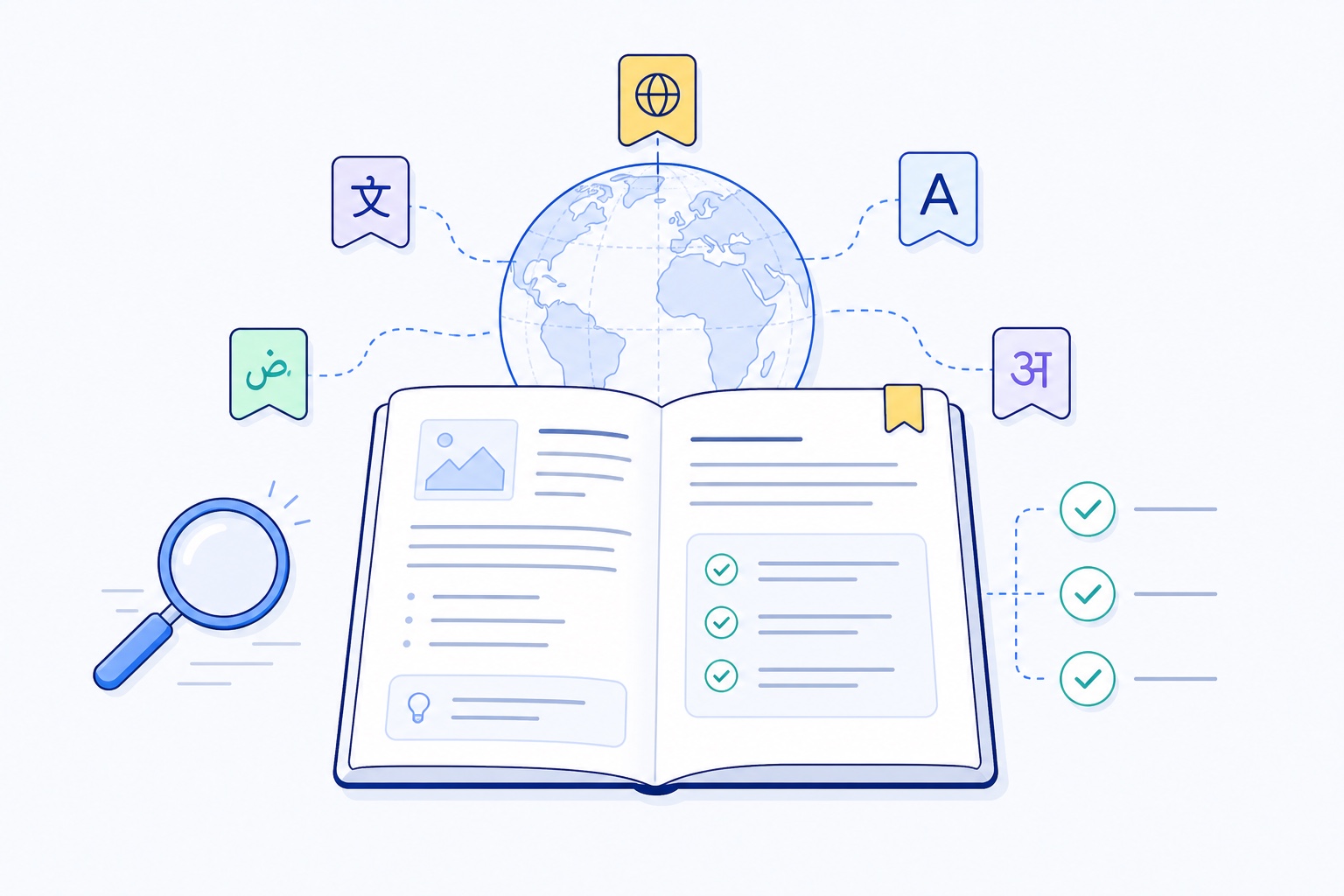
Translate business documents with secure file handling, terminology control, formatting QA, professional review, and clear retention rules.
Classify the document before choosing a workflow
A product brochure, internal report, employment policy, financial statement, and signed contract do not carry the same risk. Identify confidentiality, legal impact, personal data, required languages, deadline, formatting needs, and whether a certified translation is required before uploading content to any service.
Separate documents that can use an AI-assisted workflow from those that require an approved professional or legal process. Machine translation can support understanding and drafting, but it should not be presented as certified, notarized, or legally authoritative without the required qualified review.
Protect sensitive content and access
Use encrypted transfer, role-based access, short retention periods, and providers whose data handling terms match the document classification. Remove unnecessary personal data and secrets before translation. Do not copy confidential material into consumer tools or accounts without an approved business agreement and access policy.
Keep an audit trail of who uploaded, translated, reviewed, downloaded, and deleted each file. Store generated documents outside public executable directories and scan uploads for allowed type, real MIME format, size, malware risk, and unsafe archive contents.
Preserve structure, terminology, and references
Extract text without losing headings, tables, footnotes, page references, variables, signatures, and tracked changes. Protect names, identifiers, clauses, numbers, and terms that must not be translated. A glossary should define approved equivalents and identify phrases that remain in the source language.
Review the translated document in its final format. Text expansion can break tables, headers, forms, or page numbers even when every sentence is correct. Compare the source and target side by side and validate dates, currencies, decimal separators, cross-references, and attachment names.
Apply risk-based review and retention
Assign reviewers who understand both the language and the document domain. High-impact contracts, compliance notices, safety instructions, and financial content need stricter approval than routine internal material. Record the approved version and prevent unreviewed drafts from being distributed as final.
Define how long source files, intermediate extracts, model prompts, and translated outputs are retained. Delete temporary copies according to policy and keep only the evidence required for operations or compliance. Security is part of translation quality, not a separate step after the wording is complete.