
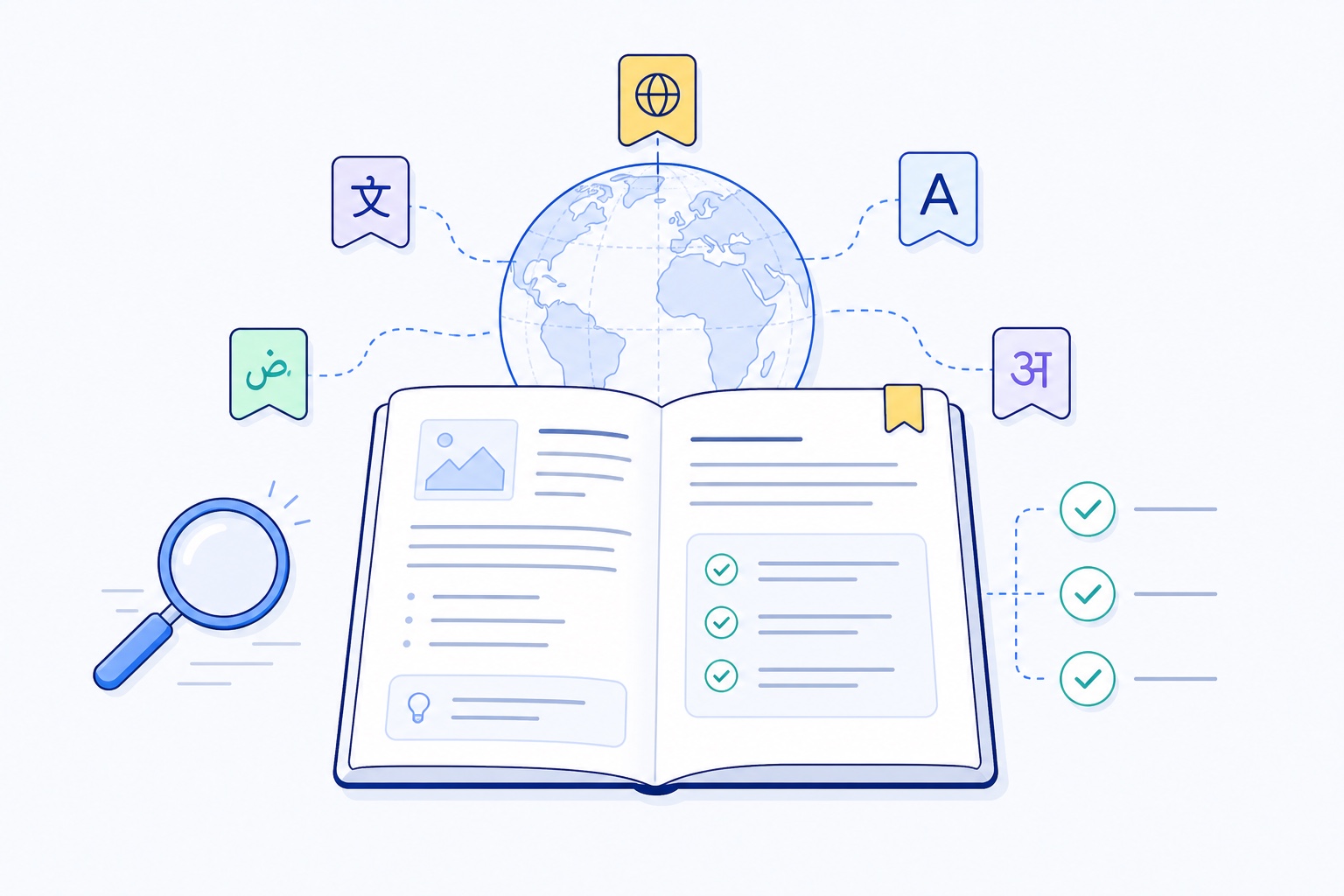
Understand the difference between translation and localization, define market-ready scope, and assign clear ownership across product teams.
Separate language conversion from market adaptation
Translation changes content from one language to another. Localization adapts the full experience for a market: terminology, examples, units, dates, imagery, legal messages, support expectations, pricing context, and user flows. A grammatically correct interface can still feel foreign when those surrounding decisions remain unchanged.
Use translation as a production capability inside a broader localization plan. This distinction helps teams estimate work honestly. It also prevents the content team from receiving late requests to fix layouts, unsupported payment methods, or market-specific compliance issues that cannot be solved with copy alone.
Define scope by user journey
Start with the journey that creates value: discovery, product evaluation, registration, onboarding, purchase, support, or account management. List the pages, messages, emails, images, and dynamic states required to complete that journey in the target language. This produces a useful release slice and exposes dependencies across systems.
Avoid translating an arbitrary percentage of the site. A visitor gains little from a localized home page if pricing, validation errors, checkout, or support remain in the source language. Prioritize complete paths and mark intentionally untranslated areas clearly.
Assign ownership and approval rules
Product owns the intended experience, engineering owns reliable delivery, content owns source clarity, and language reviewers own market suitability. Define who can approve terminology, regulated claims, brand voice, and final publication. The workflow should record decisions instead of relying on private messages or repeated manual fixes.
Create escalation rules for ambiguous or high-risk content. Marketing copy may tolerate stylistic alternatives, while legal, billing, and security messages require stricter review. The same distinction can determine which translations are automatically published and which remain pending.
Measure the localized experience
Track coverage, freshness, review status, and broken layouts alongside business outcomes. A locale can be technically complete but commercially weak because search intent, onboarding, or support content was not adapted. Compare conversion and task completion with enough context to avoid treating every market as identical.
Use feedback from search queries, support tickets, reviewers, and product analytics to improve the glossary and source content. Localization becomes easier when the source is consistent, components are designed for text expansion, and ownership is part of the normal release process.